Skip to navigation

      KPMG surveyed more than 370 real estate professionals across Switzerland about their expectations for economic developments and real estate price trends over the next 12 months.

      This year’s sresi® also examines the expected impact of the adoption of the popular initiative “No to a Switzerland with 10 million! (Sustainability Initiative)”, the key factors influencing the delivery of development projects, planning uncertainty arising from the negative anticipatory effects of revised building and zoning regulations, and the potential consequences of tighter restrictions under the Lex Koller.

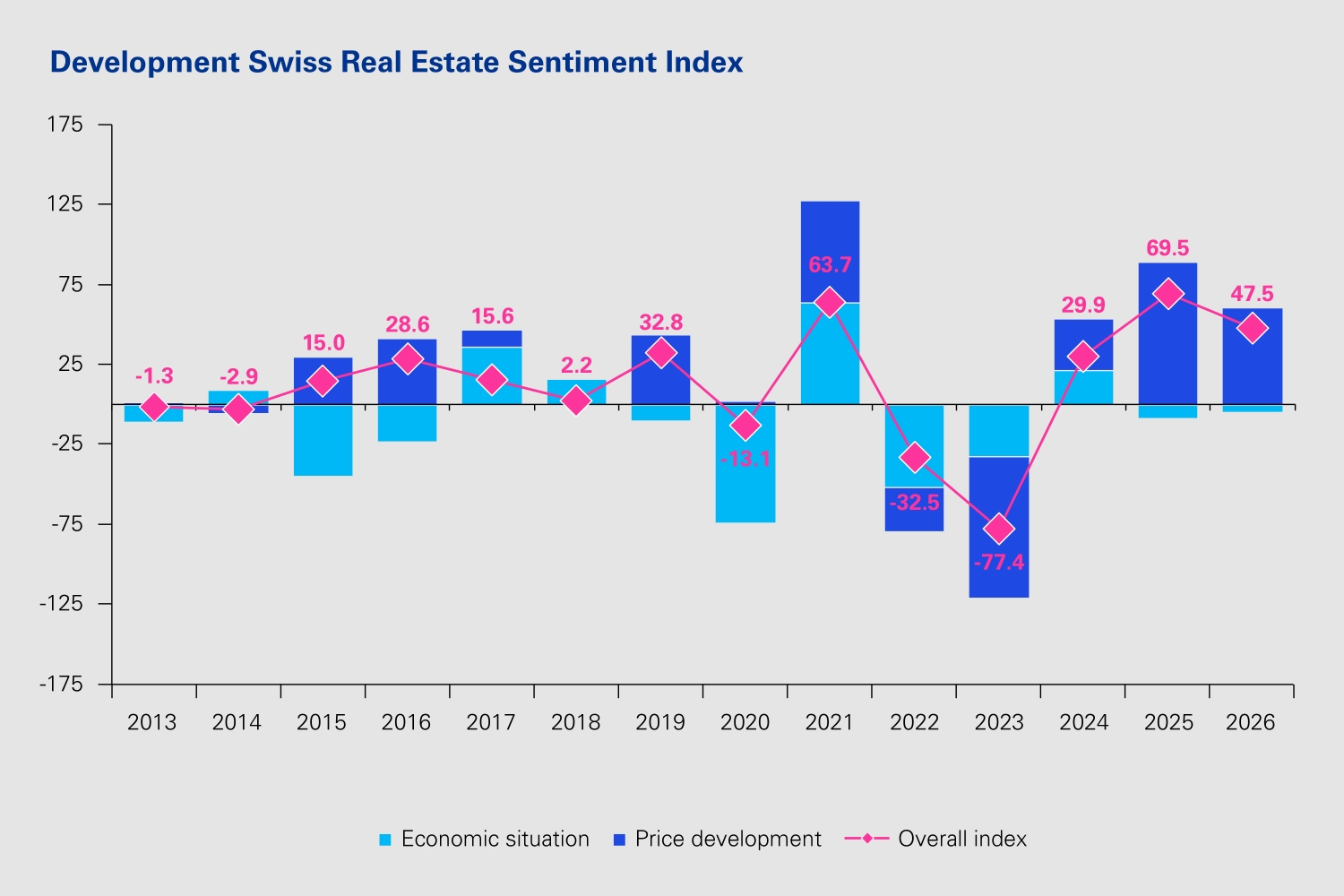
      The results of the Swiss Real Estate Sentiment Index (sresi®) continue to signal confidence in the Swiss real estate investment market. Following the record high of +69.5 points in 2025, the aggregated sresi® stands at +47.5 points in 2026.

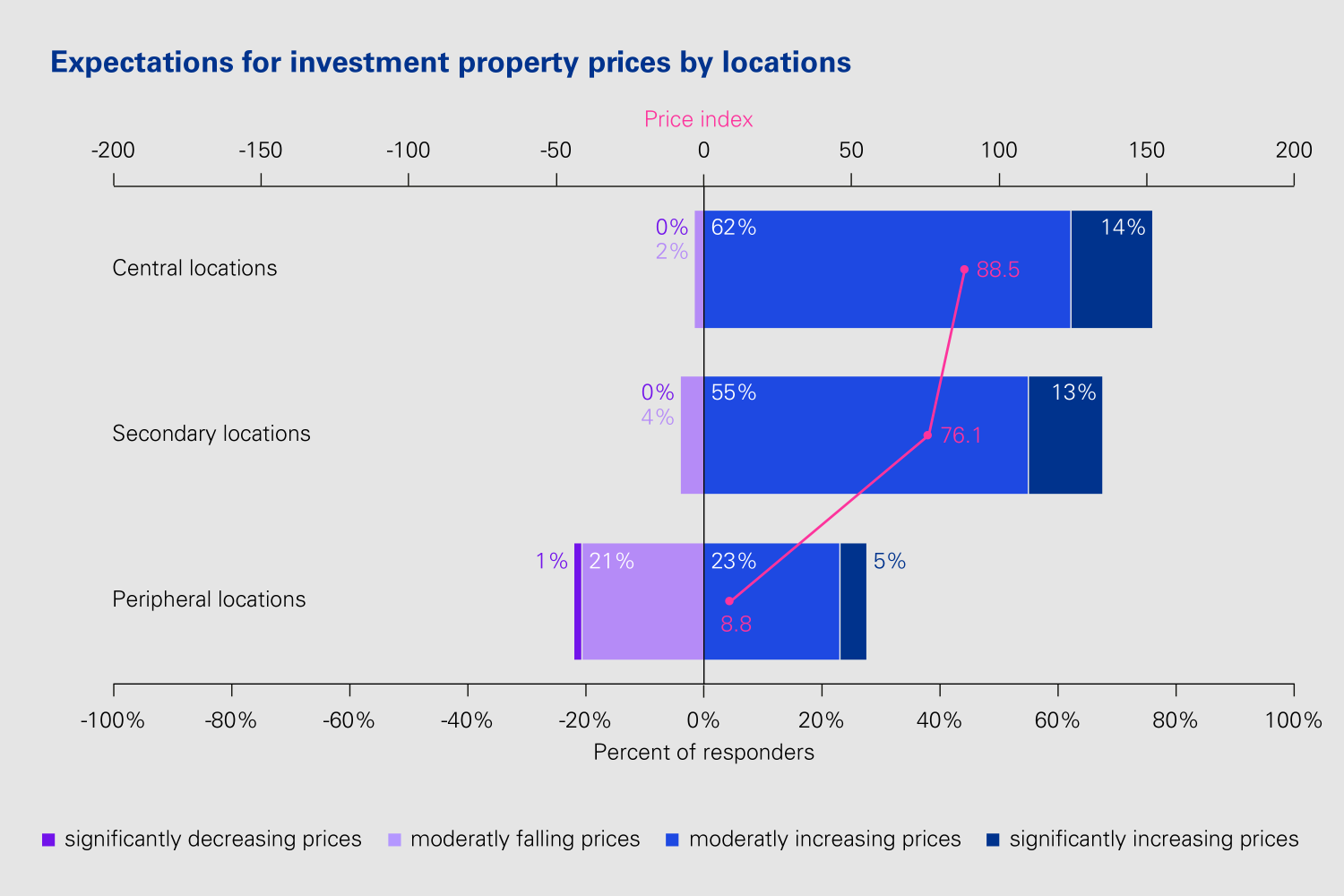
      The decline is primarily attributable to more moderate expectations for future price developments. At the same time, expectations for the Swiss economy remain slightly negative. Price expectations remain positive across all location segments, although they are less pronounced than in the record year of 2025.

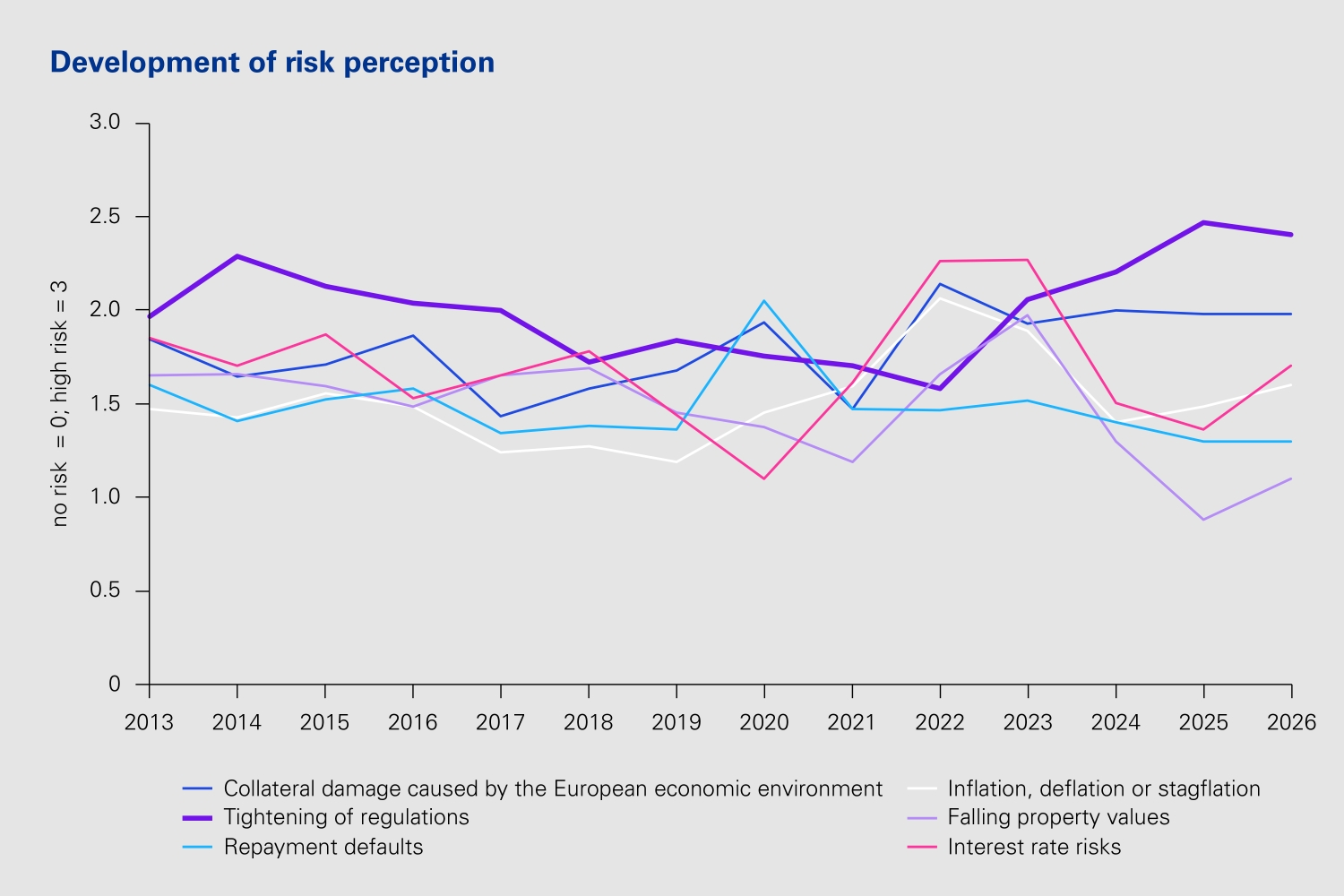
      Tighter regulation and the potential effects of the economic environment in Europe are once again cited as the greatest risks.

      What is the sresi® and who participates?

      Since 2012, the Swiss Real Estate Sentiment Index (sresi®) has provided important insights into expectations for economic and price developments in the Swiss real estate investment market. It has established itself as the market’s leading qualitative indicator.

      More than 370 real estate professionals participated in the sresi® 2026 survey, representing a cumulative investment or appraisal volume of more than CHF 360 billion. They shared their assessments of developments in the Swiss real estate investment market and property prices.

      Index and risk at a glance

      Find out how index developments and risk assessments differ across respondent groups. Explore all survey results.

      sresi

      Key findings from the sresi® 2026 survey on the Swiss real estate investment market

      Continued confidence despite heightened risk perceptions

      The Swiss real estate sector remains confident about the future.

      Following the record high of +69.5 points in 2025, the aggregate sresi® stands at +47.5 points in 2026. This represents a decline of 22.0 index points.

      The main driver is the more moderate price potential expected by market participants across all respondent groups.

      Expectations for the Swiss economy remain largely unchanged at a slightly negative level.

      While overall sentiment in the real estate investment market remains robust, perceptions of potential risks have increased slightly. 

      The risk index has risen from 1.58 to 1.67 points, reaching its third-highest level in the past 10 years. Tighter regulation remains the greatest concern for the Swiss real estate sector, scoring 2.4 points on a three-point scale.

      The potential effects of the economic environment in Europe rank second at 2.0 points. Interest rate risks rank third at 1.7 points, returning to this position for the first time since 2024.

      Positive price expectations with slowing momentum

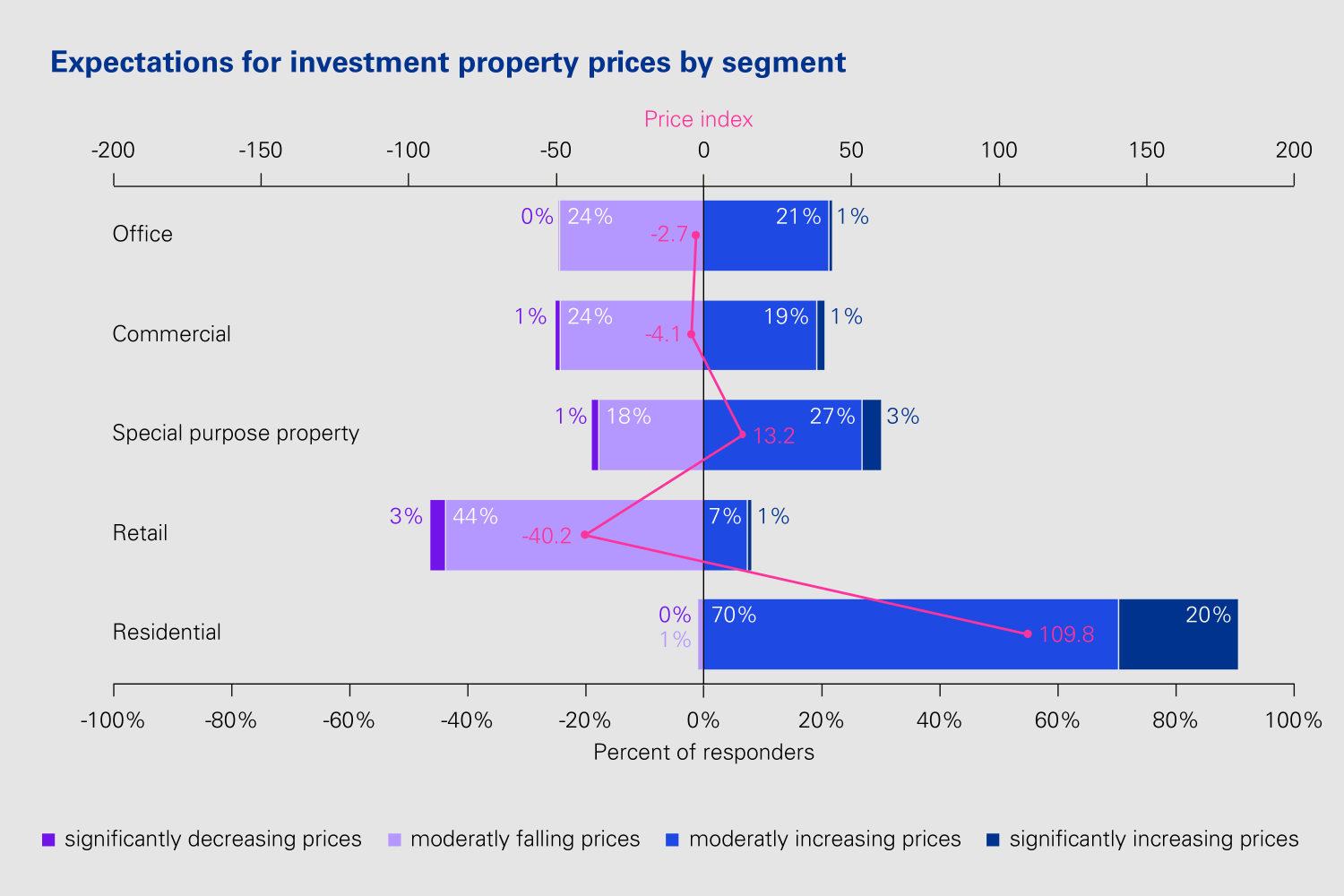
      Following an exceptionally strong previous year, expectations for future price developments are now more varied. Compared with the all-time high of +89.0 points, the price index has declined by 28.3 index points to +60.7 points. Despite this decline, overall expectations remain positive. Around 62 percent of respondents expect property prices to rise slightly or significantly over the next 12 months.

      The strongest price increases continue to be expected in the residential segment. At +109.8 points, price expectations for residential properties remain high but are below the previous year’s record level. Around 90 percent of respondents expect residential property prices to rise.

      Price expectations for office and commercial properties remain close to the stability threshold, while expectations for retail properties remain clearly negative. As in the previous year, sentiment toward special-purpose properties is slightly positive.

      Switzerland’s economic regions remain highly attractive for real estate investment. Price expectations remain positive across all location segments. The strongest price increases are once again expected in Zurich, Central Switzerland and the Lake Geneva region. Lugano remains the only economic center with negative price expectations. The Greater Ticino region has remained in negative territory since the survey began.

      Special topics: Sustainability Initiative & development projects

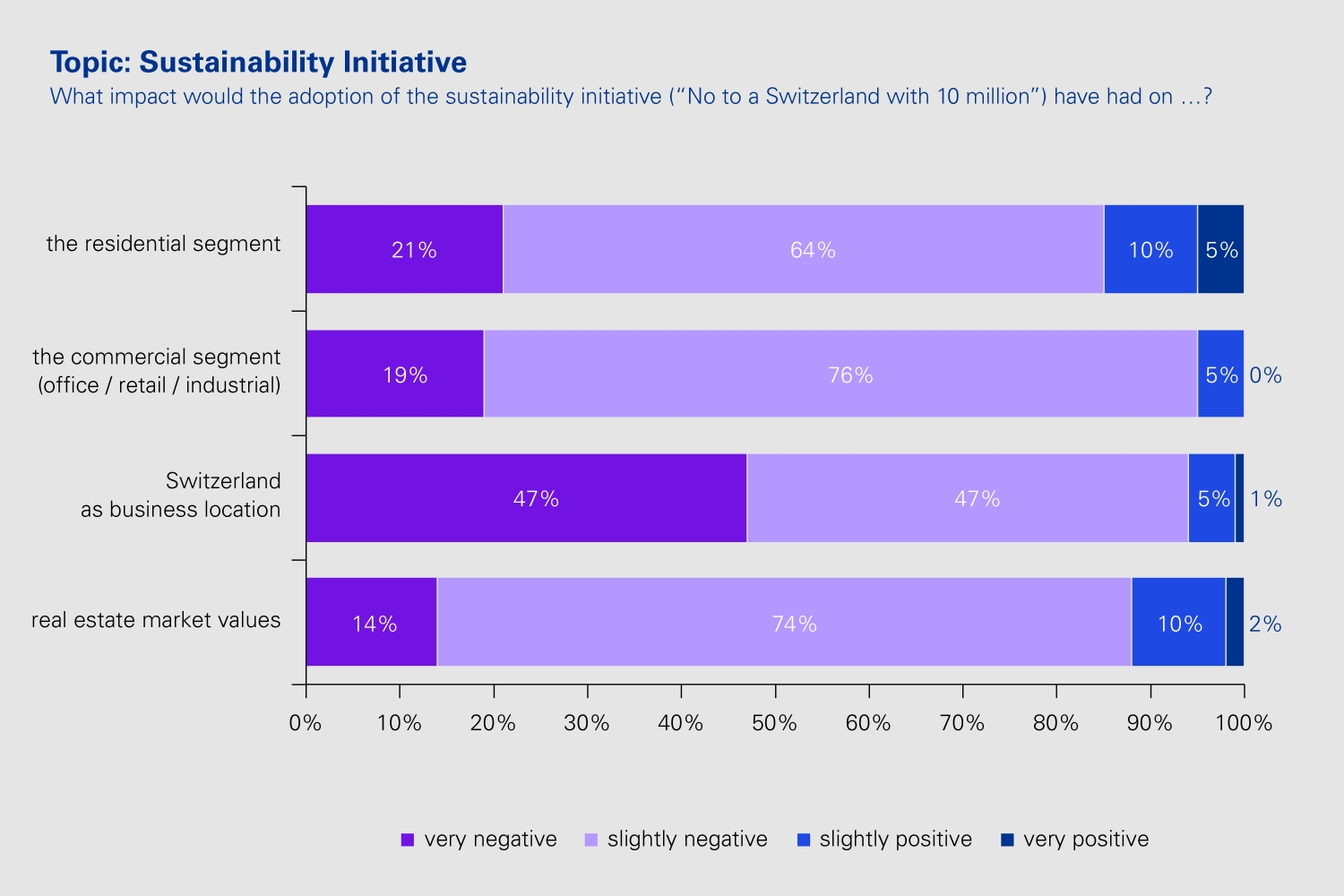
      The survey provides a clear picture of how the real estate sector assessed the potential effects of the popular initiative “No to a Switzerland with 10 million! (Sustainability Initiative)” if it had been adopted.

      94 percent of respondents believed that the initiative would have had a negative or strongly negative effect on Switzerland as a business location. For the commercial real estate segment, 95 percent expected negative effects.

      The results indicate that market participants would have viewed the potential effects on Switzerland as a business location, investment activity and the long-term development of the real estate market as particularly critical.

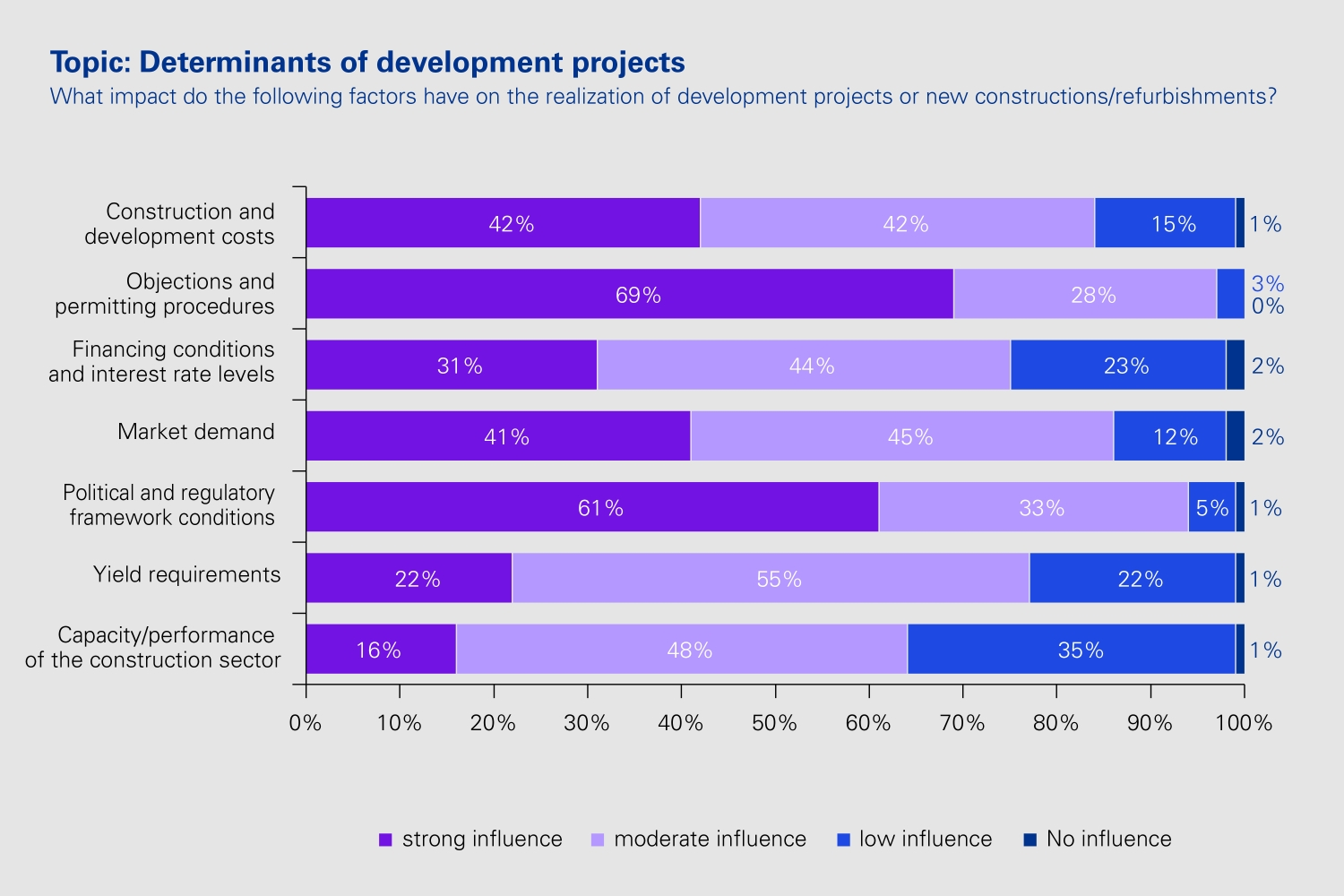
      From the real estate sector’s perspective, creating new residential and commercial space continues to present significant challenges. Objections and permitting procedures are among the most significant obstacles to the delivery of development projects, new construction and refurbishment.

      97 percent of respondents consider these factors to have a noticeable to strong influence.

      Political and regulatory conditions are also perceived as key influencing factors. 94 percent of respondents consider them material to the successful delivery of development projects. The results underline the importance of efficient and predictable procedures for the development of Switzerland’s building stock.

      Special topic: Political and regulatory conditions

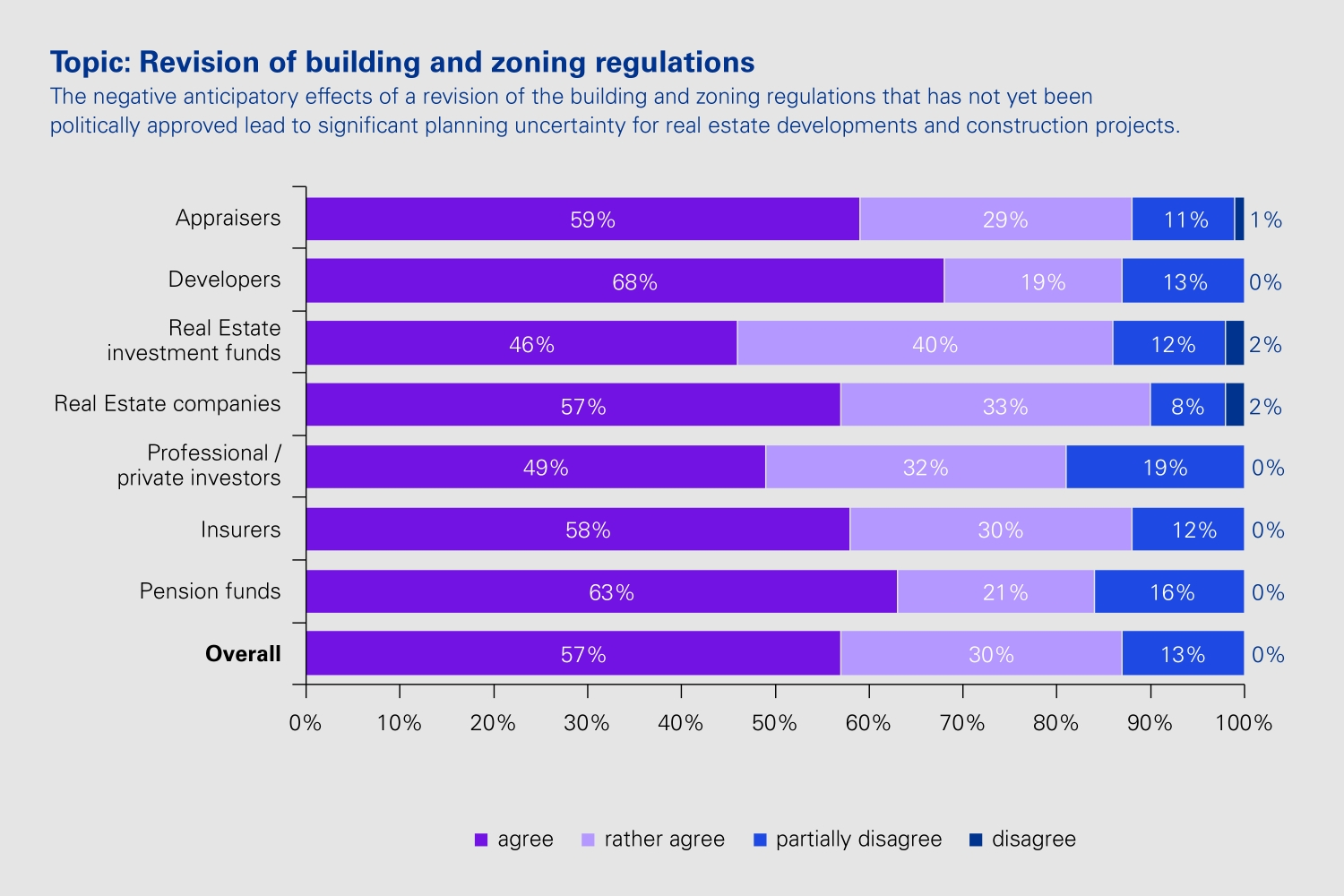
      Political and regulatory interventions remain a major concern for the sector. 87 percent of respondents somewhat or strongly agree that the negative anticipatory effects of building and zoning regulations that have not yet been adopted create considerable planning uncertainty for real estate developments and construction projects.

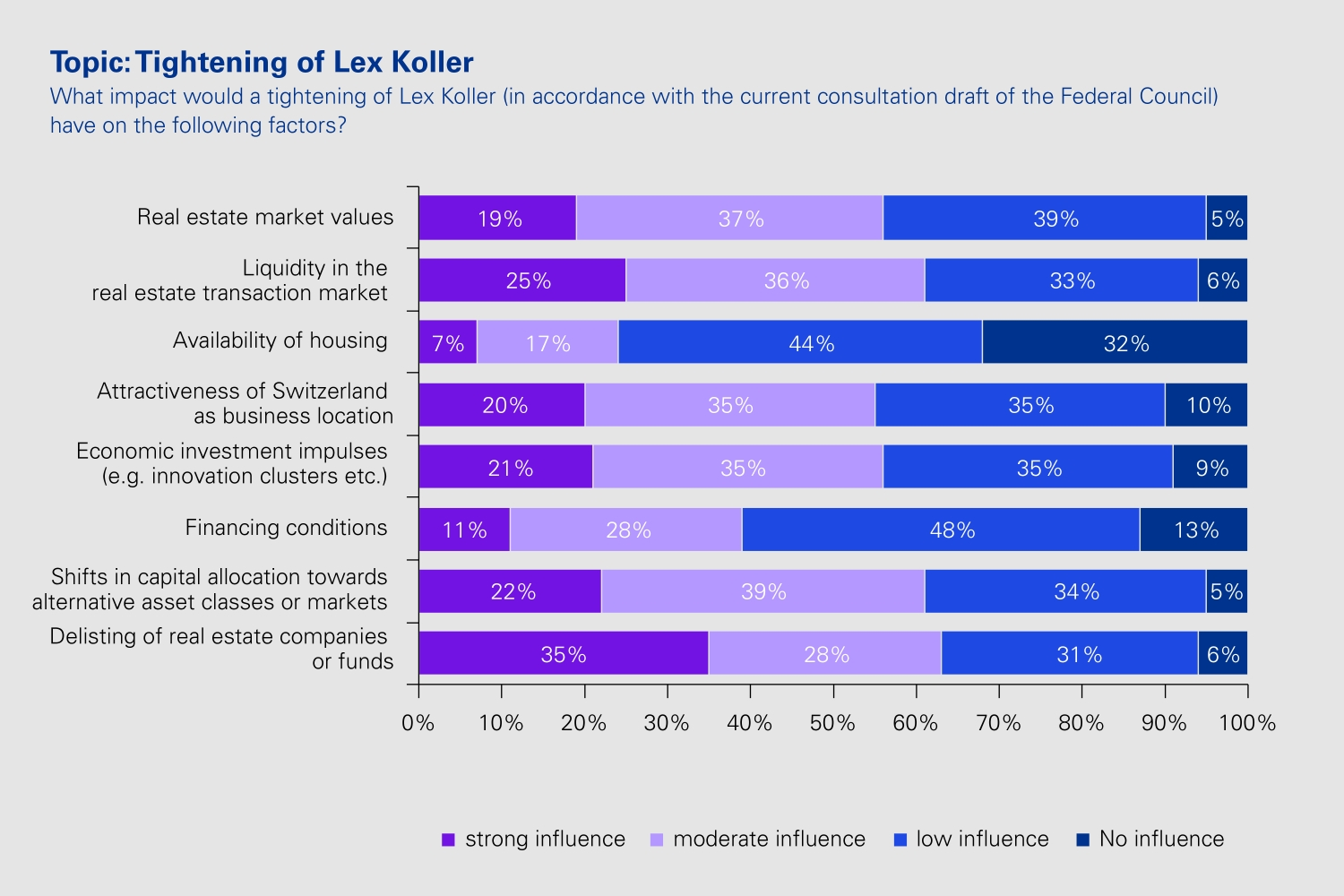
      A potential tightening of the Lex Koller could also have a noticeable effect on the market. 63 percent of respondents see a risk that real estate companies or real estate funds could be delisted. 

      61 percent expect an adverse effect on liquidity in the real estate transaction market, while the same proportion anticipate a shift in capital allocation toward alternative asset classes or markets.

      The results show that political conditions remain among the most important factors influencing market participants’ investment and development decisions.

      Get an overview of the sresi® 2026 results

      View the full survey results on our dashboards. You can filter the results to suit your needs. 


      Do you need support with the Swiss real estate market?

      Learn more about our expertise and services for the Swiss real estate market. Contact us for a no-obligation discussion.

      Beat Seger

      Partner, Real Estate Advisory, Chief Digital Officer

      KPMG Switzerland

      Nicolas Nagy

      Senior Manager, Real Estate Advisory

      KPMG Switzerland

      Christopher Gion Studer
      Christopher Studer

      Expert, Real Estate Advisory

      KPMG Switzerland

      Discover more

      Selling, valuing, managing and optimizing real estate. We provide holistic advice on financial, tax, legal and procedural real estate topics.

      Our publication informs about the real estate investment market in the canton of Geneva and thus increases transparency in the market.

      Difficulties in comparing environmental indicators of real estate funds according to AMAS and data as a basis for the sustainability strategy (in German).

      Developing and defining your decarbonization strategy to meet regulatory requirements and strategic sustainability goals.